How Often Should You Service Your Garage Door?
Your garage door may be one of the largest moving systems in your home, yet it is easy to overlook until something stops working.
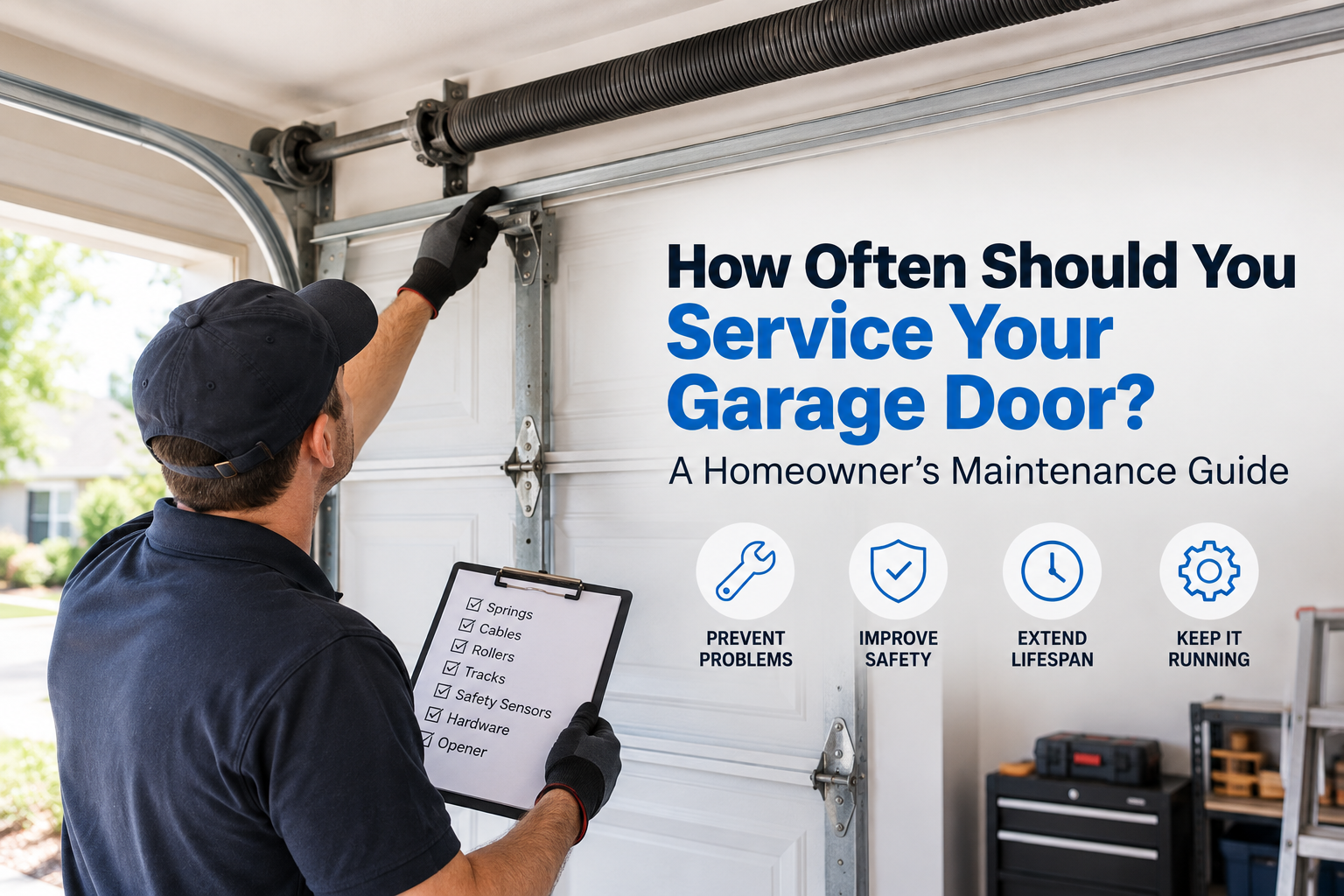
A garage door contains springs, cables, rollers, tracks, hinges, safety sensors, an opener, and numerous pieces of hardware that work together every time the door opens or closes.
Regular inspection and maintenance can help identify wear, unusual movement, or developing problems before they result in a garage door that becomes noisy, unreliable, or inoperable.
So how often should you have your garage door serviced?
For many residential garage doors, an annual professional inspection is a reasonable maintenance approach, although doors that receive heavier use or show signs of wear may need attention sooner.
The appropriate schedule can vary depending on the door, hardware, usage, environment, and manufacturer recommendations.
Why Garage Door Maintenance Matters
Garage doors operate repeatedly throughout the year.
Even when the system appears to work normally, components experience wear over time.
Routine maintenance can help identify issues involving:
Springs
Cables
Rollers
Hinges
Tracks
Fasteners
Weather seals
Safety sensors
Garage door openers
Maintenance does not guarantee that a component will never fail, but regular inspection may help identify visible wear or operational issues before they become more serious.
Signs Your Garage Door May Need Service
You do not necessarily need to wait for a scheduled maintenance interval if the door begins behaving differently.
Consider requesting service if you notice any of the following.
The Door Is Becoming Noisy
Garage doors naturally create some sound during operation.
However, new or unusually loud:
Grinding
Scraping
Squeaking
Rattling
Popping
may indicate that something should be inspected.
The Door Moves Unevenly
A garage door should generally move in a controlled and consistent manner.
If one side appears higher than the other, the door shakes significantly, or movement becomes irregular, there may be an issue involving the tracks, rollers, cables, springs, or alignment.
The Door Opens or Closes More Slowly Than Before
A noticeable change in operating speed can sometimes indicate wear or mechanical resistance.
The opener should not have to compensate for a door that is becoming increasingly difficult to move.
The Garage Door Reverses Unexpectedly
Unexpected reversing can be associated with safety sensors, opener settings, obstructions, or other operating conditions.
If the problem continues after obvious obstructions are removed, the system should be inspected.
Hardware Appears Loose or Damaged
Repeated garage door movement can affect hardware over time.
Visible issues such as loose fasteners, worn rollers, damaged hinges, or track problems deserve attention before continued operation causes additional wear.
What Can Homeowners Check?
There are several basic observations homeowners can safely make without disassembling the garage door.
You can periodically look for:
Unusual noises.
Uneven movement.
Damaged weather stripping.
Visible damage to panels or tracks.
Loose-looking hardware.
Objects obstructing safety sensors.
Frayed or visibly damaged cables.
You can also keep the area around the tracks and sensors clean.
However, simply because a component is visible does not mean it should be adjusted by the homeowner.
What Should You Not Adjust Yourself?
Certain garage door components can be under considerable tension.
Homeowners should be especially cautious around:
Torsion springs.
Extension springs.
Garage door cables.
Bottom brackets connected to cable systems.
A door that has come off its track.
Attempting to loosen, adjust, or replace these components without proper training and tools can be dangerous.
When in doubt, professional inspection is the better option.
What Does Professional Garage Door Maintenance Include?
The exact procedure depends on the type of garage door and opener, but a professional service visit may include inspection of:
Springs
The technician can look for signs of wear, damage, or improper operation.
Cables
Cables can be checked for fraying, damage, and correct positioning.
Rollers and Tracks
Tracks and rollers can be inspected for wear, damage, alignment issues, or debris affecting movement.
Hinges and Hardware
Hardware can be checked for visible wear and appropriate fastening.
Door Balance and Movement
The technician can evaluate whether the door is moving properly and whether anything appears to be placing unnecessary stress on the opener or hardware.
Safety System
Photo-eye sensors and other safety-related functionality can be inspected for correct operation.
Garage Door Opener
The opener, controls, remotes, and operating behavior can also be evaluated.
Maintenance Is Especially Important for Frequently Used Garage Doors
Some garage doors operate only a few times each day.
Others may open and close many times throughout the day.
Higher-use environments can include:
Large households.
Multifamily properties.
Apartment buildings.
Warehouses.
Commercial properties.
Service facilities.
Buildings with frequent vehicle access.
For these properties, maintenance needs may be different from those of a typical residential garage.
Commercial property owners and managers may benefit from establishing a more regular preventative maintenance schedule based on usage and equipment requirements.
Seasonal Conditions Can Affect Garage Doors
In Chicago and throughout the Midwest, garage doors operate through significant seasonal changes.
Cold temperatures, moisture, snow, ice, heat, and normal exposure can all affect moving components, seals, and general door operation.
Paying attention to changes in how the door operates throughout the year can help identify problems sooner.
When Is the Best Time to Schedule Garage Door Service?
There is no need to wait for the door to stop working completely.
Consider scheduling an inspection when:
The door has not been professionally inspected for an extended period.
You hear new or unusual sounds.
Operation becomes uneven.
Components show visible wear.
The opener appears to be struggling.
You recently purchased a home and do not know the maintenance history.
A commercial garage door experiences frequent daily use.
Preventive attention is often easier than discovering a problem when you urgently need the door to open.
Garage Door Maintenance from UBS
UBS Garage Door Repair provides professional garage door service, inspection, repair, and installation for residential and commercial properties.
We serve customers throughout Chicago and Chicagoland, with service availability extending into Northwest Indiana and Wisconsin.
Whether you are experiencing a specific problem or simply want your garage door inspected, our team can evaluate the system and discuss appropriate service options.
Keep Your Garage Door Working Properly
If your garage door has become noisy, uneven, difficult to operate, or simply has not been inspected in some time, contact UBS.
Call: 312.605.5991
Request Service: Submit a service request through our website.
Need Garage Door Service?
If you are dealing with a garage door problem now, UBS can help with repair, service and installation for residential and commercial properties.